
Inside the SEISMEC Pilot Demos
At the core of SEISMEC are 17 pilots spanning 14 key industrial ecosystems, covering multiple scales, geographic locations, value chains, and worker roles, aiming to bring human-centric innovation into real industrial and service environments.
Selected pilots who have reached a level of maturity landed at our latest General Assembly Meeting at Thessaloniki, giving us the opportunity for a hands-on experience of the technologies, to directly discuss with the teams behind them, and to evaluate how far each solution has progressed in its real-world implementation and impact.
Dive into the pilot demos!
VR Safe with ATES
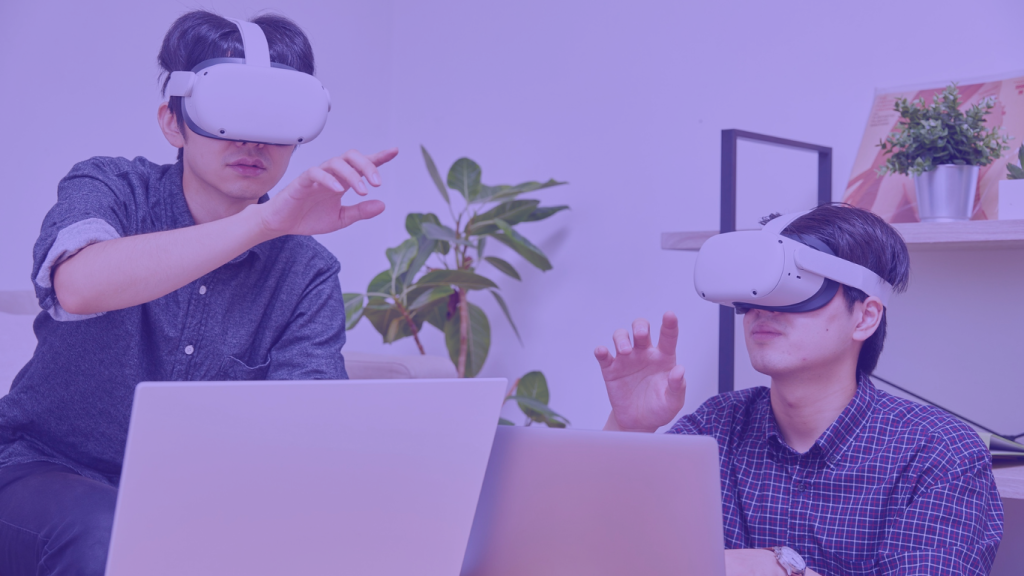
ATES presented VR Safe, a human-centred virtual reality (VR) training environment tailored specifically for submerged arc welding. The purpose of the VR training is to create a safe, low-stress, and risk-free environment where new personnel can practice and make mistakes while learning the submerged arc welding process before performing it in the production area. At Thessaloniki, we had the opportunity to test the VR headset, but in the upcoming months, a stress-measurement wristband and a custom-designed eye-tracking system integrated into the VR headset will also be used in cooperation with CERTH and Technische Universität Berlin.
FLOWS Zeleni Kras Dashboard with ARCTUR
ARCTUR, in partnership with RRA Green Karst, showcased the FLOWS Zeleni Kras Dashboard, a human-centric decision-support tool designed to help tourist destination managers in the Green Karst region better understand and manage visitor flows, offering a double benefit for people and nature. By integrating IoT devices and smart sensors with existing big data sources, the tool provides a comprehensive, real-time overview of how tourism develops across the destination and how specific management actions influence that development. The system combines data on arrivals and overnight stays, weather conditions, traffic flows, visitor counters in natural parks and on hiking trails, and information from tourist accommodation providers. The dashboard also enables assessing whether promotional campaigns for specific natural areas actually lead to an increase in visitors, or to evaluate whether measures aimed at easing pressure on sensitive environments effectively reduce the number of visitors in those locations. In this way, fragile ecosystems can be protected while also improving the overall visitor experience and reducing negative impacts on local communities.
Using explainable AI and machine learning, Flows Green Karst will support the development of predictive models for tourism flows. This will allow destination management organisations (DMOs) and other users to:
● plan and adjust marketing activities based on expected visitor behaviour and needs,
● proactively manage visitor pressure in sensitive areas to safeguard residents’ quality of life,
● optimise infrastructure and services to improve the experience of guests and workers in tourism, and
● work more efficiently with clear, evidence-based insights.
Overall, the tool will significantly improve the quality of tourism destination management by enabling better-informed, data-driven decision-making and supporting a more sustainable, people-friendly development of tourism in the Green Karst.
AI-Enhanced People Experience Feedback Platform with NTTD
NTTD demonstrated the core functionality of the People Experience Feedback Platform, designed to collect and analyse employee input in an easy, intuitive, and anonymous way. Through a clean interface built with Amazon Web Services (AWS), Angular, Typescript, Java, Spring Boot, PostgreSQL, Docker, Figma, and Tailwind, employees can submit quick ratings or share detailed free-text responses without revealing their identity.
The platform’s purpose is two-fold, including the development of both the backend, responsible for core logic, data processing, and integrations, and the frontend, which delivers an engaging and responsive user interface to ensure a seamless experience.
Explainable AI Assistant for Foreign Object Debris (FOD) Detection and Reporting in Airport Operations with Zagreb Airport, CERTH and Infraplan
CERTH and Zagreb Airport demonstrated an explainable AI-powered assistant designed to detect and automate the reporting of Foreign Object Debris (FOD) at airports. The system features an interactive dashboard that allows users to generate comprehensive reports, using either sample images or their own uploaded images. Users can review and interact with the system’s outputs through the interface. The final report includes visual identification of detected objects, alongside information such as object description, size, and potential source of origin. The purpose of this tool is to assist inspection workers in airport safety operations, specifically in activities spanning from enhancing human-centric human-AI collaboration, supporting workers while reducing fatigue, streamlining compliance with EASA-mandated safety reporting protocols for FOD detection and supporting inspection personnel in maintaining airport operational safety standards efficiently and accurately.
Implemented technologies are primarily web-based interactive dashboards available online, object detection algorithms, automated report generation utilising Visual Question Answering (VQA) technology and PDF export functionality for final reports. Infraplan has also demonstrated its data collection app, which communicates with CERTH’s AI assistant, enabling real-time entry saving to the database and the automatic generation of reports.
Stress and Fatigue Detection Using EmotiBit Wearable Sensors with CERTH
CERTH’s presentation was focused on a real-time system for monitoring stress and fatigue levels using the EmotiBit wearable device. The demo showcased how physiological signals, captured via photoplethysmography (PPG), electrodermal activity (EDA), and temperature sensors, can be streamed and analysed to detect stress and fatigue. The data acquisition pipeline, real-time visualisation, and the algorithms used to identify elevated stress or fatigue states were also presented. The technologies embedded include the EmotiBit wearable device (PPG, EDA, temperature sensors), Wi-Fi for connectivity, a real-time visualisation dashboard and the stress & fatigue detection algorithm. The pilot aims to explore how physiological data can be used to understand users’ mental states and evaluate worker safety in operational contexts. Specifically:
● To support the development of human-centric technologies that avoid overloading or marginalising workers.
● To assess the human impact of new technologies deployed in pilot scenarios, informing potential redesign or configuration improvements.
The tool illustrates how wearable sensors can provide actionable insights for designing safer, more human-centred workplaces, while respecting privacy and ethical boundaries. Physiological data is used solely for research, in full compliance with GDPR and ethical standards, with no continuous monitoring or future access.
Eye-tracking study for user experience and user interface on Voice-picking operation device with MC Sonae
MC Sonae shared progress on their pilot of voice-directed warehousing (Talkman) systems, along with the use of eye-tracking equipment. The focus of the recent tests was the physical setup: how workers feel when wearing an eye-tracking device alongside the headset used for voice-command interactions, to assess the procedure and implement corrections. The primary technology used is voice-directed warehousing (also known as voice-picking or Talkman), whereas for recording the activity, an eye-tracking device from Pupil Labs was used.
This preliminary step is key to understanding comfort, ergonomics, and attention load before moving on to full-scale testing with warehouse personnel. The overarching goal is to improve user experience with voice-guided workflows and explore how these systems can support efficiency without adding cognitive strain.
And all these were only a sneak peek into the SEISMEC pilots!
As partners continue refining their tools, we are seeing the early foundations of solutions that are not only innovative but also support and assist employees’ work.
Explore our full pilot catalogue.