
A company introducing artificial intelligence might spend months testing software, measuring performance and calculating productivity gains. Yet one important aspect is often overlooked: how do employees actually feel about the technology they are expected to use?

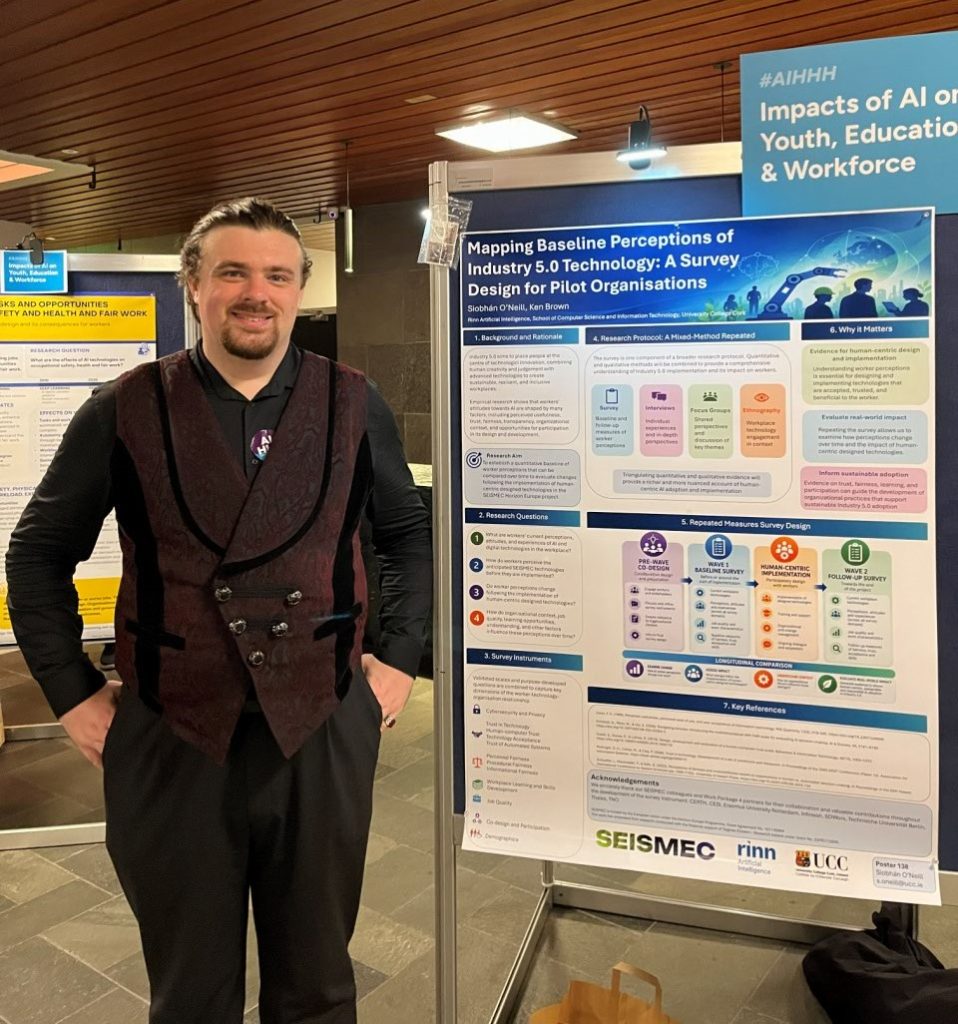
The poster titled Mapping Baseline Perceptions of Industry 5.0 Technology: A Survey Design for Pilot Organisations explores how workers’ attitudes towards AI and digital technologies can be measured before and after implementation. It is a joint work of researchers Siobhán O’Neill and Ken Brown from University College Cork presented at the AI Hype, Hope & Humanity Festival 2026 in Rotterdam.
Employees may welcome technologies that reduce repetitive tasks, but they may also worry about privacy, fairness, increased workload or losing control over their work. These perceptions influence whether new solutions are accepted and used effectively.
The SEISMEC researchers developed a survey examining trust, technology acceptance, cybersecurity, fairness, workplace learning, job quality and employee participation. The approach combines surveys with interviews, focus groups and workplace observations to understand how attitudes evolve throughout implementation.
By comparing workers’ perceptions before and after technologies are introduced, researchers aim to identify which factors support successful adoption and where improvements are needed.
How the survey works?
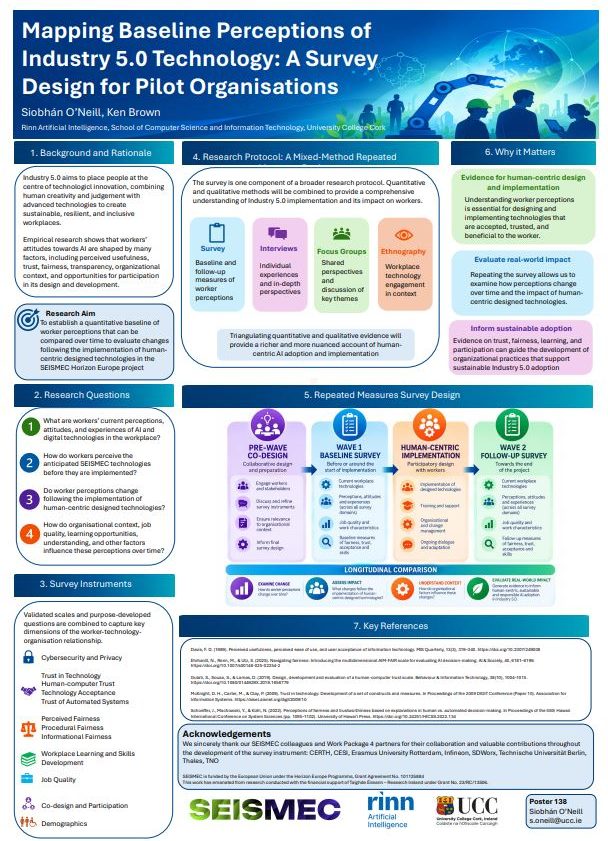
The survey follows workers over time in four stages.
- Co-design: workers and other stakeholders help design the survey, so that the questions fit each organisation.
- First survey: carried out before or at the start of implementation, to record how employees currently see technology at work.
- Implementation: the new technologies are introduced with workers’ participation, supported by training and ongoing dialogue.
- Second survey: towards the end of the project, the same questions are asked again.
Why it matters for Industry 5.0
Technical performance alone cannot determine whether workplace innovation is successful. A system may increase efficiency while negatively affecting employees’ confidence, autonomy or well-being.
The SEISMEC research provides a method for evaluating these human aspects alongside technological outcomes. Although the study presents a research design rather than final results, it establishes an important principle: human-centric innovation begins with understanding workers and continues by listening to their experiences.