
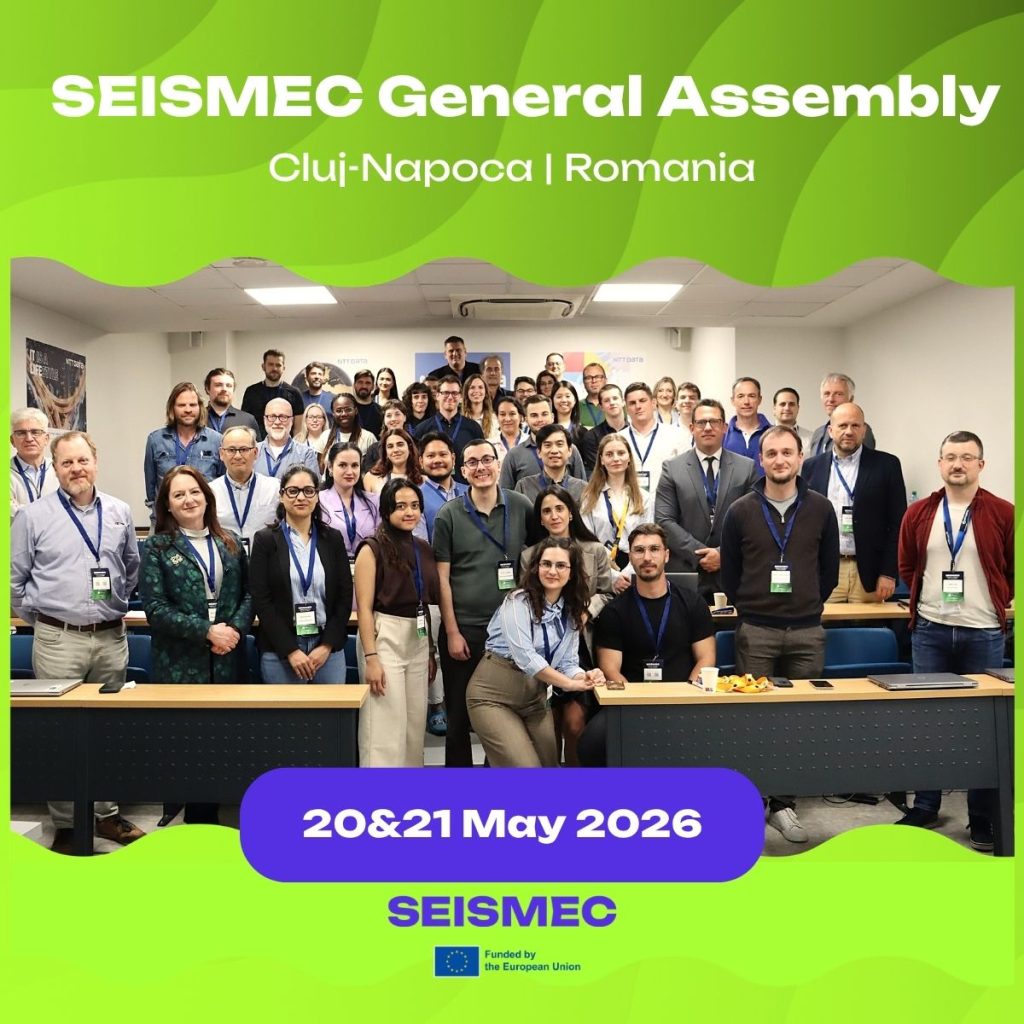
The SEISMEC consortium came together last week for its General Assembly, bringing partners from across Europe to reflect on progress, exchange experiences, and define the next steps towards a more human-centred and empowering industrial future.
Throughout the meeting, partners explored the evolution of the SEISMEC Framework, the AGILE Guidebook, and the project’s growing portfolio of tools and methodologies designed to support Industry 5.0 principles in practice. Sessions focused on worker participation, co-design approaches, human-AI collaboration, industrial competitiveness, and cross-pilot learning, highlighting the project’s commitment to ensuring that technological innovation is developed with people, not merely for them.
A major theme throughout the General Assembly was the practical implementation of human-centred innovation. Partners showcased examples from pilot activities demonstrating how workers are actively involved in technology design, implementation, and evaluation processes. Discussions highlighted the importance of trust, collaboration, transparency, and continuous feedback in creating workplaces where digital technologies enhance rather than replace human capabilities.
Dedicated workshops explored mutual human-AI learning in the workplace, examining how organisations can better understand, measure, and support collaborative learning processes between workers and intelligent technologies. Other sessions focused on European industrial competitiveness, policy frameworks for human-centricity, and the opportunities and challenges associated with implementing Industry 5.0 principles across different sectors.
The meeting also provided an opportunity to refine the project’s Key Exploitable Results. Partners discussed how the SEISMEC Framework, the AGILE Guidebook, and supporting solutions can be integrated into a unified methodology capable of delivering tangible value to organisations seeking to implement human-centred digital transformation strategies.
The General Assembly concluded with reflections from the Advisory Board members: Kirstie Ball, Ismael Bienvenido, Magdalena Brewczyńska, and Martin Peters, who acknowledged the progress achieved by the consortium and the quality of the work developed across the project’s pilots and work packages. Their feedback provided valuable guidance for the final phase of the project, encouraging partners to continue strengthening exploitation, stakeholder engagement, and the long-term sustainability of SEISMEC’s outcomes.
SEISMEC is working across 17 pilots involving companies in 14 countries and spanning 14 industrial ecosystems. Through these pilots, the project is demonstrating how workers, organisations, and technology developers can collaborate to create more inclusive, ethical, productive, and empowering work environments.
As the project advances, the consortium continues to build evidence, methodologies, and practical tools that will help European industry embrace Industry 5.0 values while strengthening competitiveness, innovation, and workforce wellbeing.
The General Assembly once again highlighted that the future of industry depends not only on technological excellence, but also on ensuring that people remain at the centre of innovation and decision-making.