
Malt is an online marketplace that connects businesses with independent freelancers across many professional fields. Freelancers create profiles describing their skills and experience, clients describe their project needs and the platform proposes suitable candidates through automated ranking, human selection by Malt staff, or a hybrid of both. Once a match is made, clients and freelancers negotiate directly and formalise the work through a contract.
Within SEISMEC, Malt focuses on a core issue for digital labour platforms: matching needs to talent efficiently, while ensuring that decisions do not create systematic differences in visibility and access to opportunities between groups of freelancers.
The pilot develops and integrates evaluation tools that assess matching systems throughout their lifecycle. The tools are used when designing new algorithms, when deciding whether to replace legacy systems and when monitoring deployed solutions. Particular attention is given to large language models, which are increasingly used in the staffing industry to support matching processes.
The evaluation framework combines standard business indicators, such as conversion rates and matching efficiency, with fairness metrics that measure differences in exposure, opportunity or outcomes between groups of freelancers. This makes risks visible early and supports evidence-based go or no-go decisions before changes are deployed at scale.
The pilot uses a participatory, multi-stakeholder approach. The pilot primarily involves machine learning engineers responsible for building and maintaining Malt’s matching algorithms. Malt’s machine learning team develops and updates the matching algorithms, while the SEISMEC research team acts as an independent evaluator. New or revised algorithms are tested using the evaluation tools and reviewed through structured reports to inform deployment decisions.
Malt also involves a Freelancer Advisory Board of seventeen freelancers selected to reflect diversity in expertise, geography and socio-economic background. The board is consulted annually on progress, ethical considerations and emerging trade-offs between business objectives and fairness, ensuring that those affected by platform decisions have a formal channel into governance.
Fairness evaluation is integrated into regular engineering and governance workflows rather than treated as a separate audit. Engineers can see how changes affect both performance and fairness metrics, and decision reports support internal deliberation before deployment.
The pilot also addresses a common governance question for platforms: how to handle potential trade-offs between business goals and fairness outcomes. If such tensions arise in the future, the pilot helps prepare structured ways to discuss and decide, involving technical teams and the freelancers affected.
This pilot applies Industry 5.0 in practical terms, using human-centric AI governance to improve fairness, accountability and trust in platform-mediated labour markets.
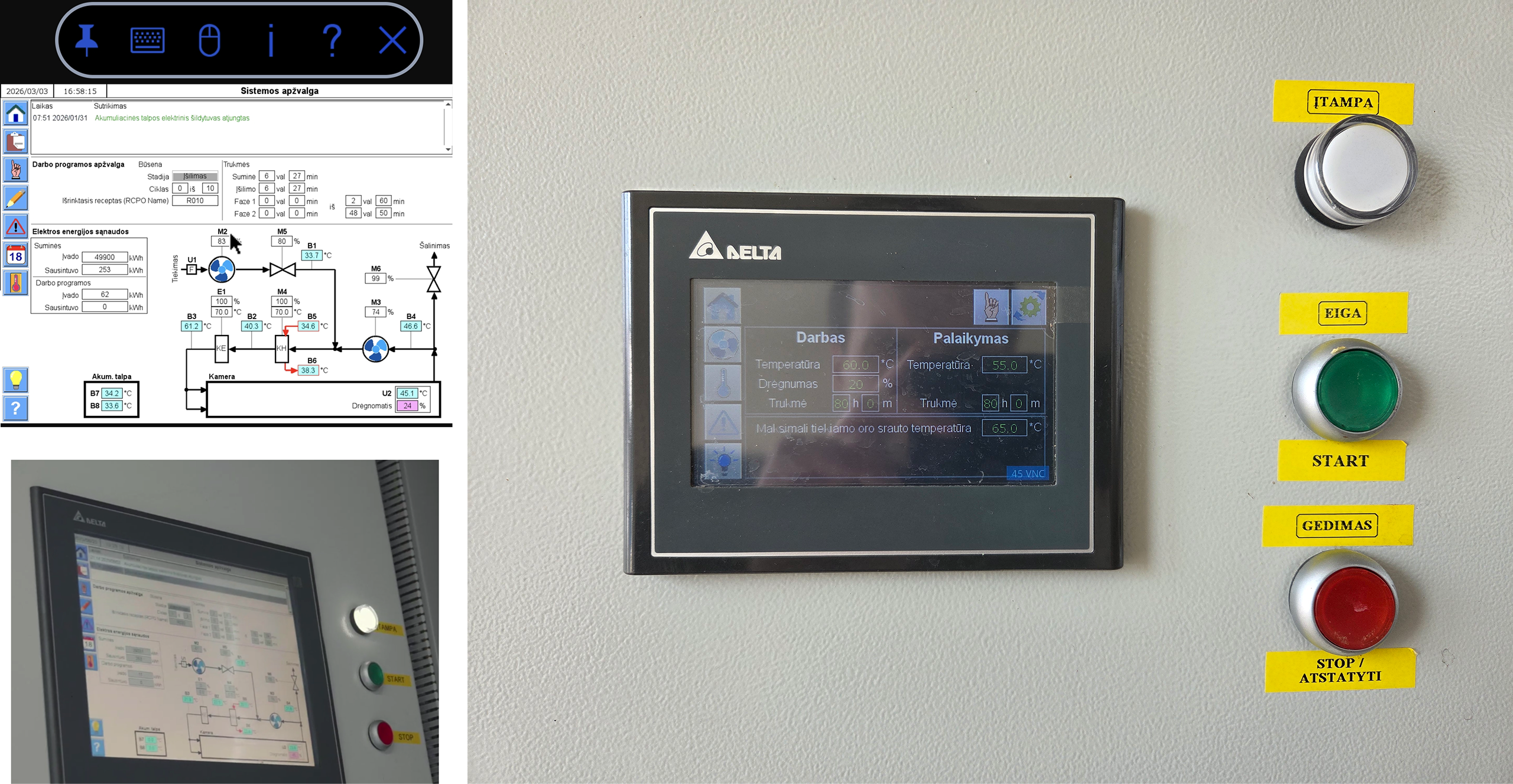
The pilot redesigns work processes using AI, IoT and related tools to increase autonomy, reduce mental load and support better decisions. Technically, Kvalitetas is exploring AI (publicly available in the market) and IoT solutions alongside Manufacturing and Warehouse (integrated into RIVILE GAMA software), Odoo CRM (with AI functionality) Systems to support both management and manufacturing activities.
The tools aim to improve monitoring of production parameters, support inventory and material balance management, improve routine administrative and planning tasks, and strengthen food safety implementation. AI-based tools are also being explored for marketing and communication, including the creation of promotional and educational content that translates scientific and biological product information into accessible messages for consumers interested in functional nutrition and personalised diets.
SEISMEC CAPS factors guide choices and assessment, keeping creativity, automation, productivity, safety and job satisfaction in view.