
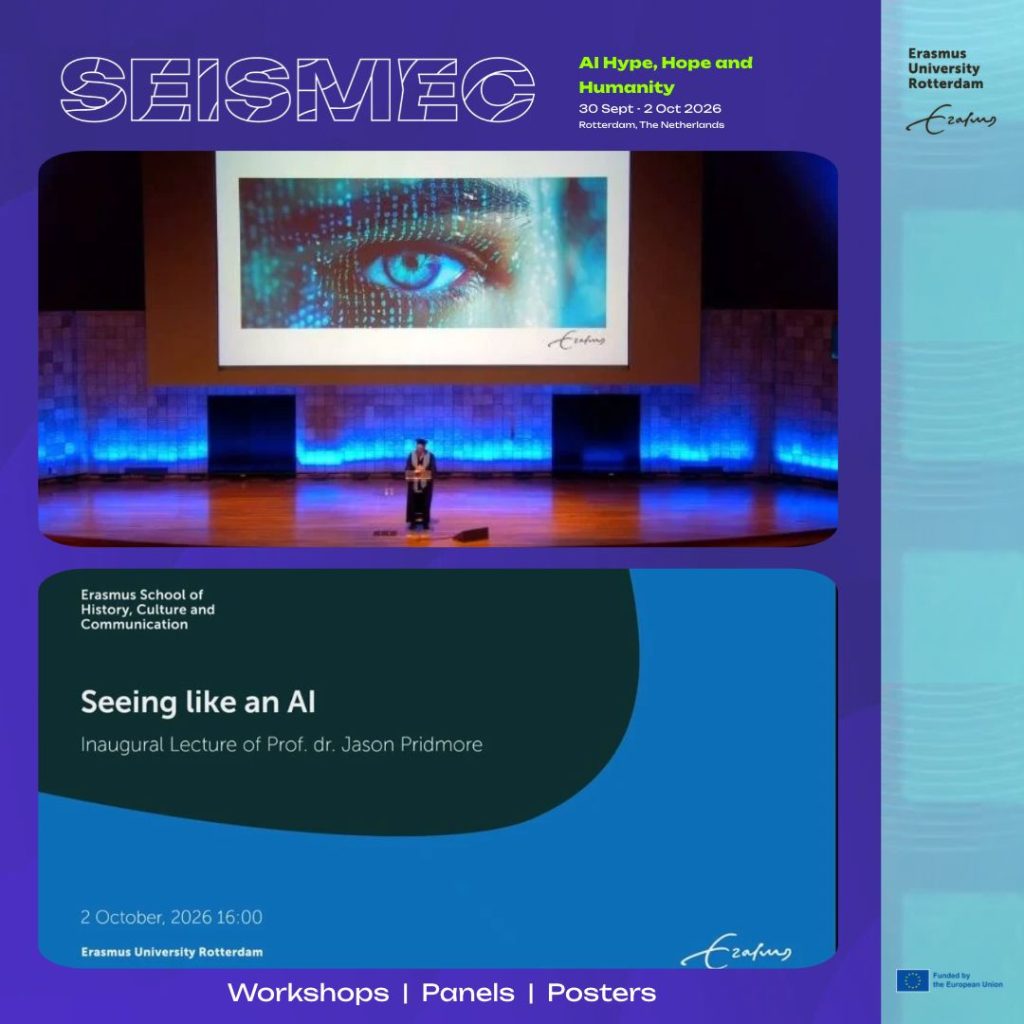
 From 30 September to 2 October 2026, SEISMEC partners participated in the AI Hype, Hope & Humanity Festival in Rotterdam, organised by Erasmus University Rotterdam. One of the highlights of the festival was the inaugural lecture “Seeing Like an AI”, delivered by Professor Jason Pridmore from Erasmus University Rotterdam. The lecture explored four interconnected themes, beginning with how AI perceives and interprets the world and its growing influence on the workplace. Jason examined the implications of AI for work and human interaction with technology, before turning to how universities can adapt to technological developments and strengthen their engagement with society. The lecture concluded with personal reflections on the experiences and influences behind his academic journey, offering a broader perspective on the relationship between AI, work, education and society.
SEISMEC research and expertise across the festival
SEISMEC partners actively contributed to the festival through panel discussions, interactive workshops, scientific presentations and poster sessions, bringing human-centric Industry 5.0 research into the wider conversation on responsible AI.
Jan Laurijssen (SD Worx) contributed to a workshop on mutual learning between humans and AI, while other researchers addressed workplace learning, worker participation and organisational change.
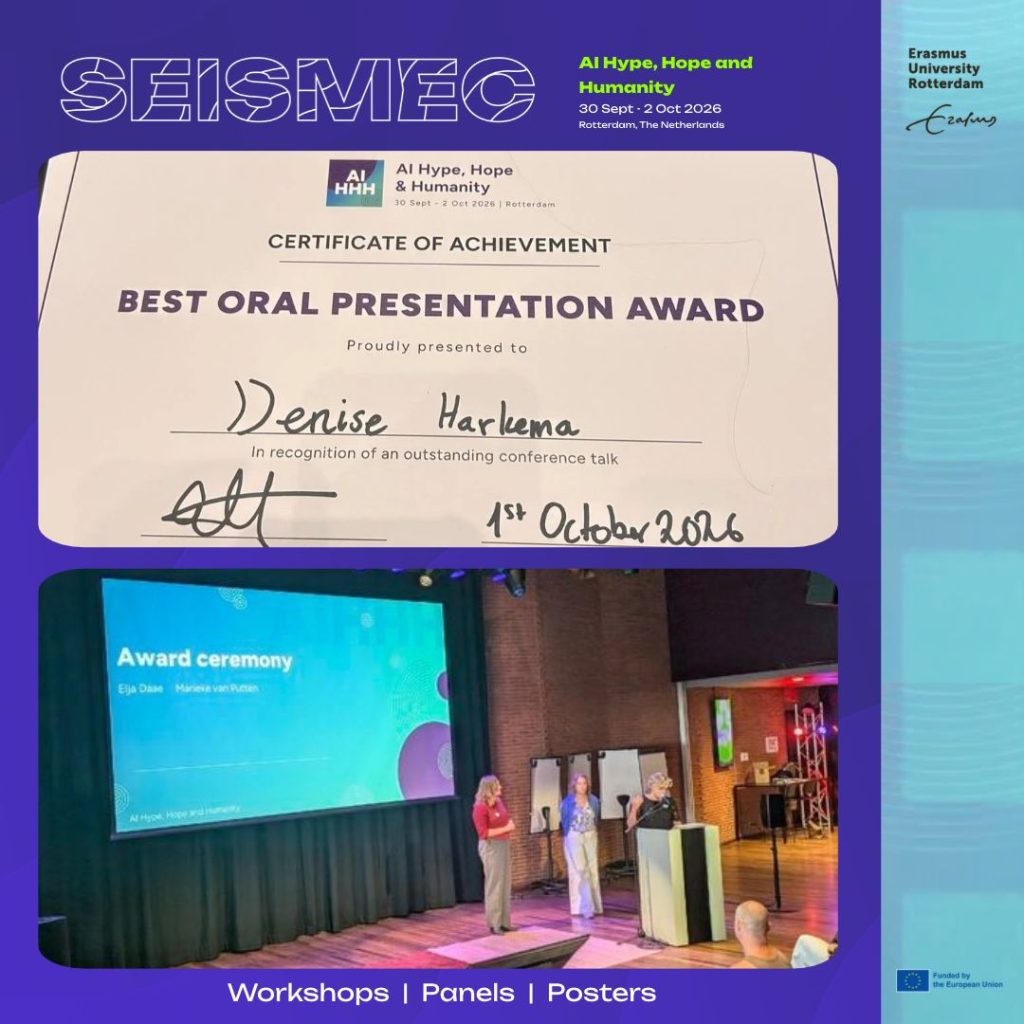
A particular achievement was Denise Harkema’s (TNO) Best Oral Presentation Award for her SEISMEC-based research on occupational safety and health in human-centric technology implementation.
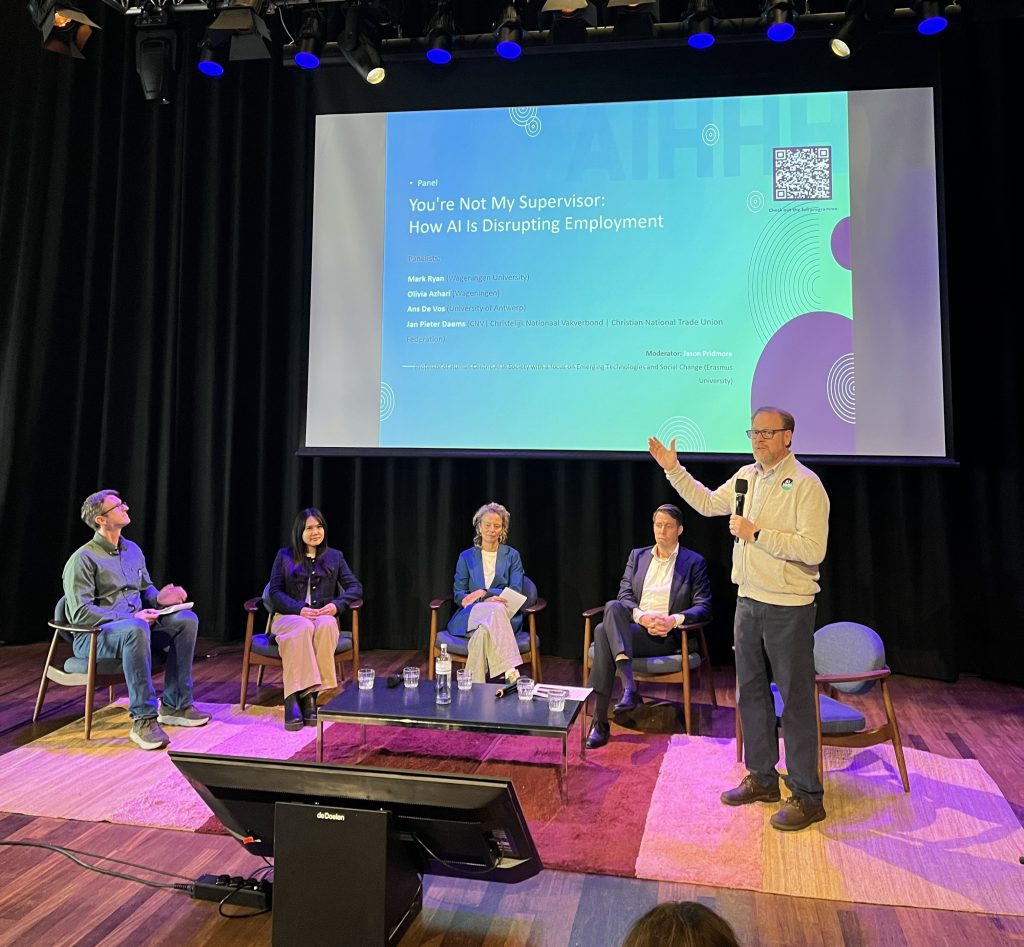
Jason Pridmore (Erasmus University) participated in discussions on when not to use AI and moderated a panel on AI in human resource management, while Nikos Militsis (CERTH) explored AI literacy for responsible technology use.
Together, these contributions highlighted the importance of balancing technological innovation with workers’ autonomy, safety, wellbeing and organisational needs.
The festival also provided an opportunity to showcase SEISMEC research through four scientific posters, highlighting different aspects of human-centric technology implementation. The posters explored workers’ perceptions of Industry 5.0 technologies, fairness and trust in AI adoption (Siobhán O’Neill, and Ken Brown), a shared KPI framework for evaluating technological and social impacts across 17 pilot sites (Arina Rahma, Thanh Ngo and Nayab Bushra), and the role of standards in responsible AI implementation (Denise Harkema). The poster sessions encouraged discussions with the scientific community and offered valuable opportunities to exchange insights on the practical challenges of introducing new technologies into workplaces.
|
Connecting research, people and society
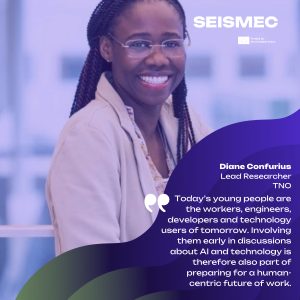
Beyond the scientific discussions, the festival provided valuable opportunities for networking, knowledge exchange and engagement with audiences beyond academia. The event’s diverse programme demonstrated how conversations about AI could connect researchers, industry representatives, policymakers and younger generations. Reflecting on the festival, Dr Diane Confurius (TNO) shared her thoughts:
“One message particularly stayed with me. Across several sessions, including those on AI and work and AI and journalism, the importance of critical thinking and maintaining basic skills kept coming back. AI can support us in many ways, but as we increasingly rely on it, we also need to ask: Which knowledge and skills do we need to preserve, and how do we ensure that people remain able to critically assess what AI produces?
For me, this connects directly to SEISMEC’s vision of human-centric technology implementation. SEISMEC emphasises involving workers in the design and implementation of technology to better job quality. The conference made me think that we could extend this perspective even further: today’s young people are the workers, engineers, developers and technology users of tomorrow. Involving them early in discussions about AI and technology is therefore also part of preparing for a human-centric future of work.
This is why I particularly appreciated that AIHHH was also open to children and young people, who could engage directly with AI and robotics. Young people were not simply observing technology but actively engaging with it. If we want future technologies to remain human-centric, developing critical thinking should start well before people enter the workplace.“
 “
SEISMEC’s participation reinforced the project’s commitment to placing people at the centre of digital transformation, ensuring that emerging technologies contribute to safer, more inclusive and productive workplaces. Siobhan O’Neill and Padraigh Jarvis, from Rinn AI UCC summarised the festival:
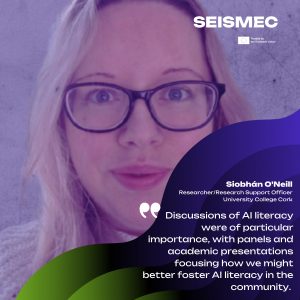 “The Festival was a wonderful way to bring together academics, policy makers, community groups, and the general public to explore the potential of AI, and to also discuss its challenges. There were many individual events to attend during the Festival, including academic talks and poster presentations, workshops, panel discussions and co-creation activities. Discussions of AI literacy were of particular importance, with panels and academic presentations focusing how we might better foster AI literacy in the community. During the Festival we represented SEISMEC and our work exploring trust, understanding, and fairness in relation to technology adoption and attitudes. This garnered a lot of conversation with attendees and was also the focus of a number of the academic sessions. Overall, the Festival was an enjoyable experience providing us with the opportunity to explore AI in different settings, and to network with colleagues and community organisations.”