
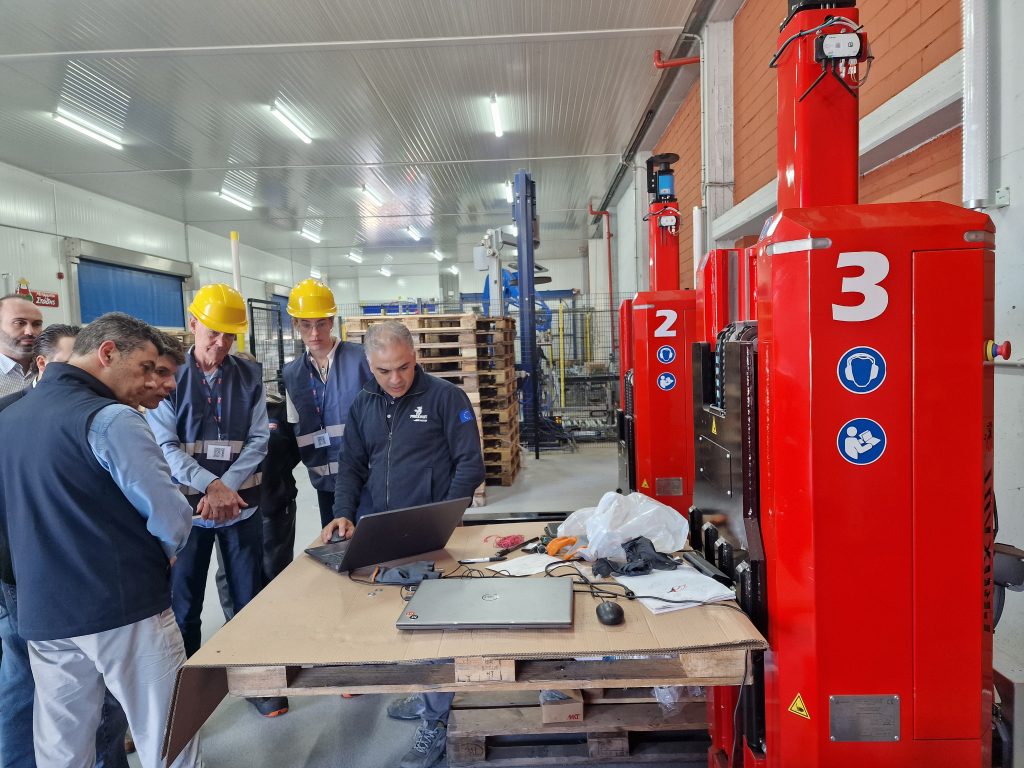
What happens to workers when automated vehicles begin taking over tasks traditionally performed by forklift drivers? This was one of the questions explored during a two-day SEISMEC pilot visit to Barba Stathis in Greece in October 2026.
Researchers from TNO, the Technical University of Berlin (TUB) and CERTH worked with the company to assess its implementation of Automated Guided Vehicles (AGVs), focusing on workplace safety, changing responsibilities and workers’ experiences with the new technology.
Introducing AGVs into the workplace
The visit began with a review and demonstration of the AGV system, giving researchers an opportunity to observe how the vehicles operate and discuss their interaction with employees.
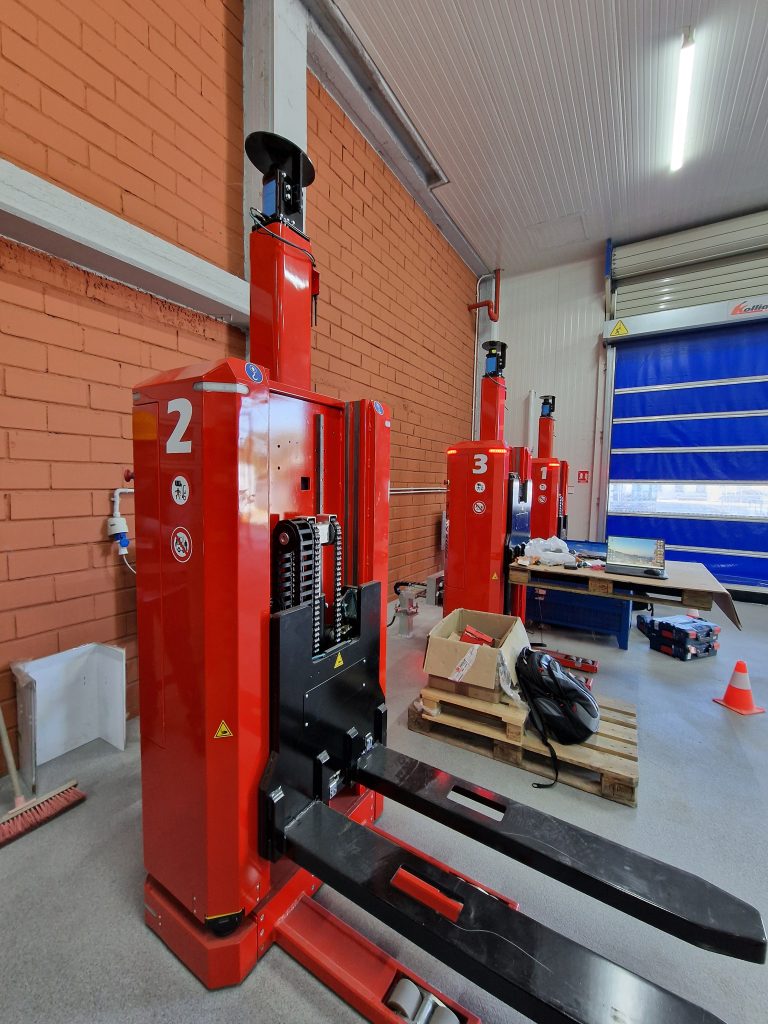
Introducing AGVs can change how work is organised. An Automated Guided Vehicle (AGV) is a mobile robot used in industrial environments, warehouses and manufacturing facilities to transport materials and goods without direct human operation. AGVs follow predefined routes using technologies such as sensors, magnetic strips or laser navigation. By automating repetitive transport tasks, they help improve operational efficiency, reduce manual workloads and enhance workplace safety. In the context of Industry 5.0, AGVs can support human-centric workplaces by allowing employees to focus on more complex, skilled and value-added activities.
At Barba Stathis, one of the main questions concerned the transition from manually operating forklifts to supervising automated vehicles. This involves understanding which skills employees will need, how they can be trained for new responsibilities and how the company can support job retention.
Researchers also examined occupational safety and health, considering how automation could affect physical, mental and social workload, as well as working conditions. Discussions included a Fundamental Rights Impact Assessment (FRIA) and how workers’ needs can be considered throughout the implementation process. The team also discussed how SEISMEC’s human-centric change approaches could help Barba Stathis introduce AGVs in a way that reflects workers’ needs and changing responsibilities.
Putting the AGV control interface to the test
Beyond discussing the technology, the SEISMEC team wanted to understand how employees would experience it in practice.
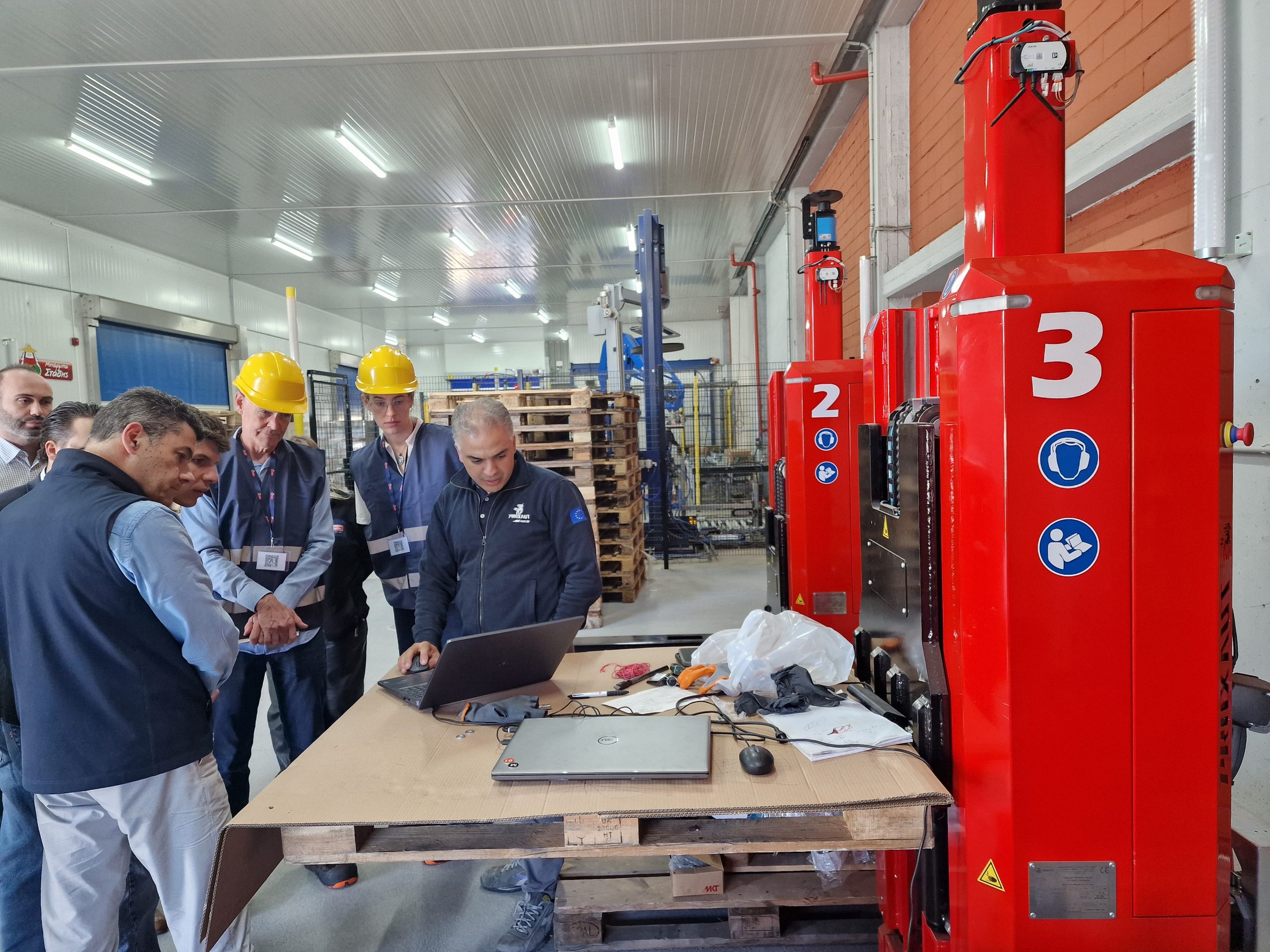
On the second day, workers tested the AGV control interface for the first time. Researchers observed how they interacted with the system, gathered their initial impressions and used two technologies to collect additional information.
Eye-tracking equipment supported by TUB recorded where participants directed their attention while using the interface. CERTH supported the evaluation with EmotiBit wearable sensors, providing another source of data on workers’ responses during the session.
Combining these methods with direct feedback will help researchers identify aspects of the interface that may need improvement. Initial observations and possible recommendations were also discussed with Barba Stathis during the visit.
Using worker feedback to improve automation
The next step is to analyse the information collected during the evaluation. TUB will use the findings to develop practical recommendations for the AGV interface and propose ways for Barba Stathis to continue gathering and incorporating employee feedback.
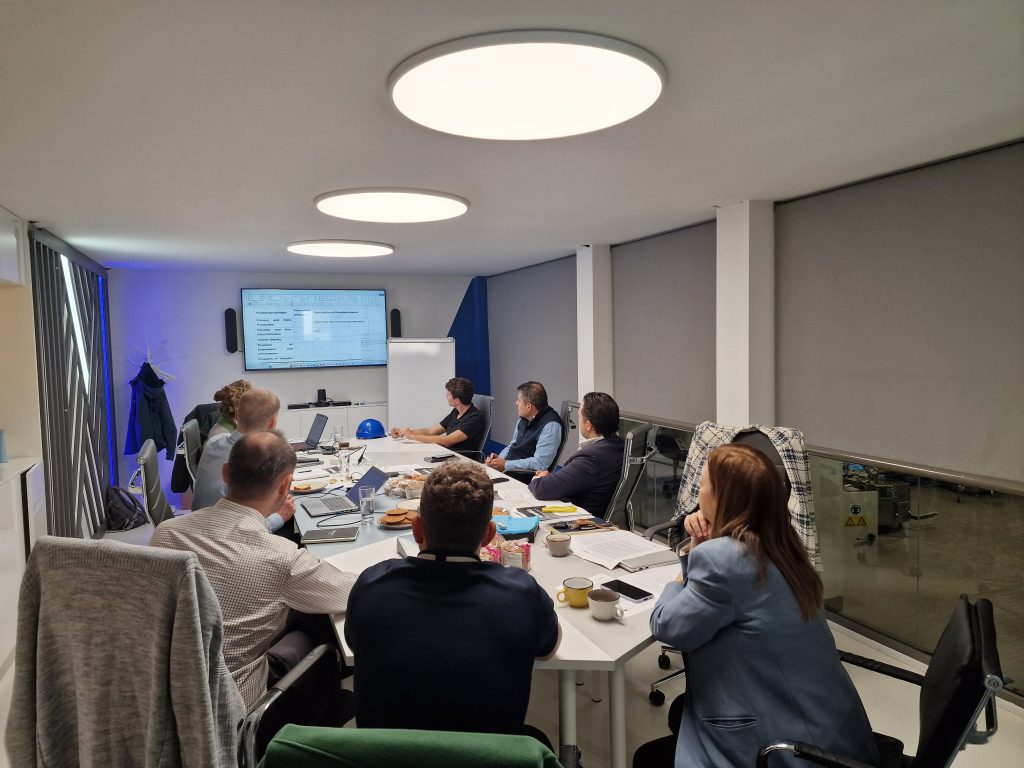
The visit also forms part of SEISMEC’s broader work on human-centric industrial transformation. Introducing automated systems is not simply a question of whether the technology functions as intended. It also requires understanding how employees interact with it, how their responsibilities change and what support they need to work safely and confidently.
By involving workers directly in the evaluation, the Barba Stathis pilot reflects SEISMEC’s approach to human-centric industrial transformation. The project will continue supporting the company throughout AGV implementation, with particular attention to worker involvement, safety and upskilling.